Quick checkmates and how to stop them
Beginners lose games in just a few moves to these traps. Each lesson lets you watch it, play it, and defend against it.
How traps work
Most traps follow one pattern: bait, then punishment. The bait is a free pawn or a capture that seems to win something. The punishment is a check, a fork or a mate the bait made possible. Learning a trap teaches you both sides: how to set it, and how to see it coming.
- Fool's mate and scholar's mate go after the weak f-pawns.
- Legal's mate gives up the queen to mate with minor pieces.
- Every trap has a simple defense. Learn it first.
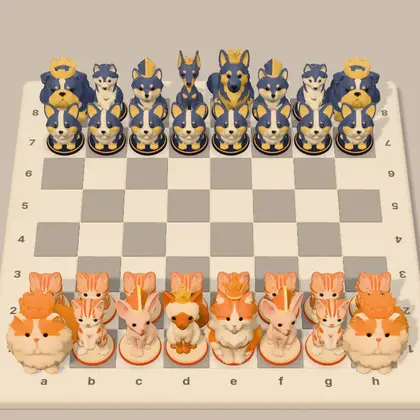
Cats vs Dogs Chess: 3d chess with cats and dogs
Play the computer on Kitten or Puppy level and see if you can spring a trap on it.
Play Cats vs Dogs ChessQuestions
What is a chess trap?
A move that looks safe or tempting for your opponent but loses material or the game to a hidden reply. Traps work because players grab a free pawn or ignore a threat.
How do I avoid falling for traps?
Before every move ask what your opponent is threatening and what happens if they answer your move with a check, a capture or a sacrifice. Never take material without checking the reply.
Do traps work on strong players?
Rarely. Good players see the idea. Traps are most useful for learning what to watch for.
What is the fastest checkmate?
Fool's mate, in two moves, though it needs White to play badly. Scholar's mate takes four moves.