En passant: the special pawn capture
En passant is French for "in passing". It lets a pawn capture an enemy pawn that has just moved two squares and landed beside it. Try it on the boards below.
En passant explained
A pawn can move two squares from its starting square. If that move lands next to an enemy pawn, the enemy pawn could have captured it had it moved only one square. En passant gives that capture back, as a one-time chance.
You can capture en passant only on the very next move. If you play something else, the right is gone. The capturing pawn moves diagonally to the square the other pawn passed over, and the captured pawn is removed.
When is it allowed?
Your pawn must be on its fifth rank (rank 5 for White, rank 4 for Black), the enemy pawn must have just moved two squares from its start, and it must have landed right beside your pawn.
Is it ever forced?
No. Like any capture, you may decline. It is only available for one move.
Does it work with other pieces?
No. En passant is only for pawns capturing pawns.
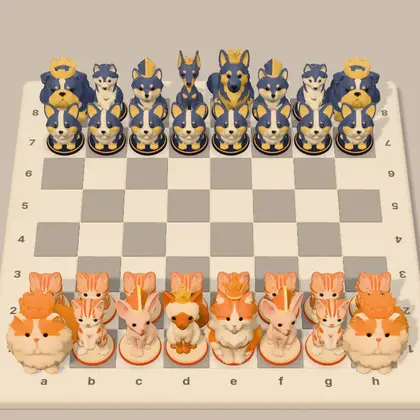
Cats vs Dogs Chess: 3d chess with cats and dogs
Cats vs Dogs Chess is a 3D chess game with five computer levels and a pass-the-phone mode. Free in your browser.
Play Cats vs Dogs ChessPractice puzzles
Keep learning
Questions
Why does en passant exist?
When pawns gained the two-square first move, a pawn could slip past an enemy pawn that would otherwise have been able to capture it. En passant keeps the old balance.
Can I capture en passant if the pawn moved two squares earlier in the game?
No. It must be your very next move after the enemy pawn moves two squares.
Does en passant remove the pawn from the board?
Yes. The captured pawn is removed from the square beside yours, not from the square you land on.